Beyond the Board: How AI is Redefining Chess
From Deep Blue to AlphaZero, exploring the balance between machine precision and human creativity
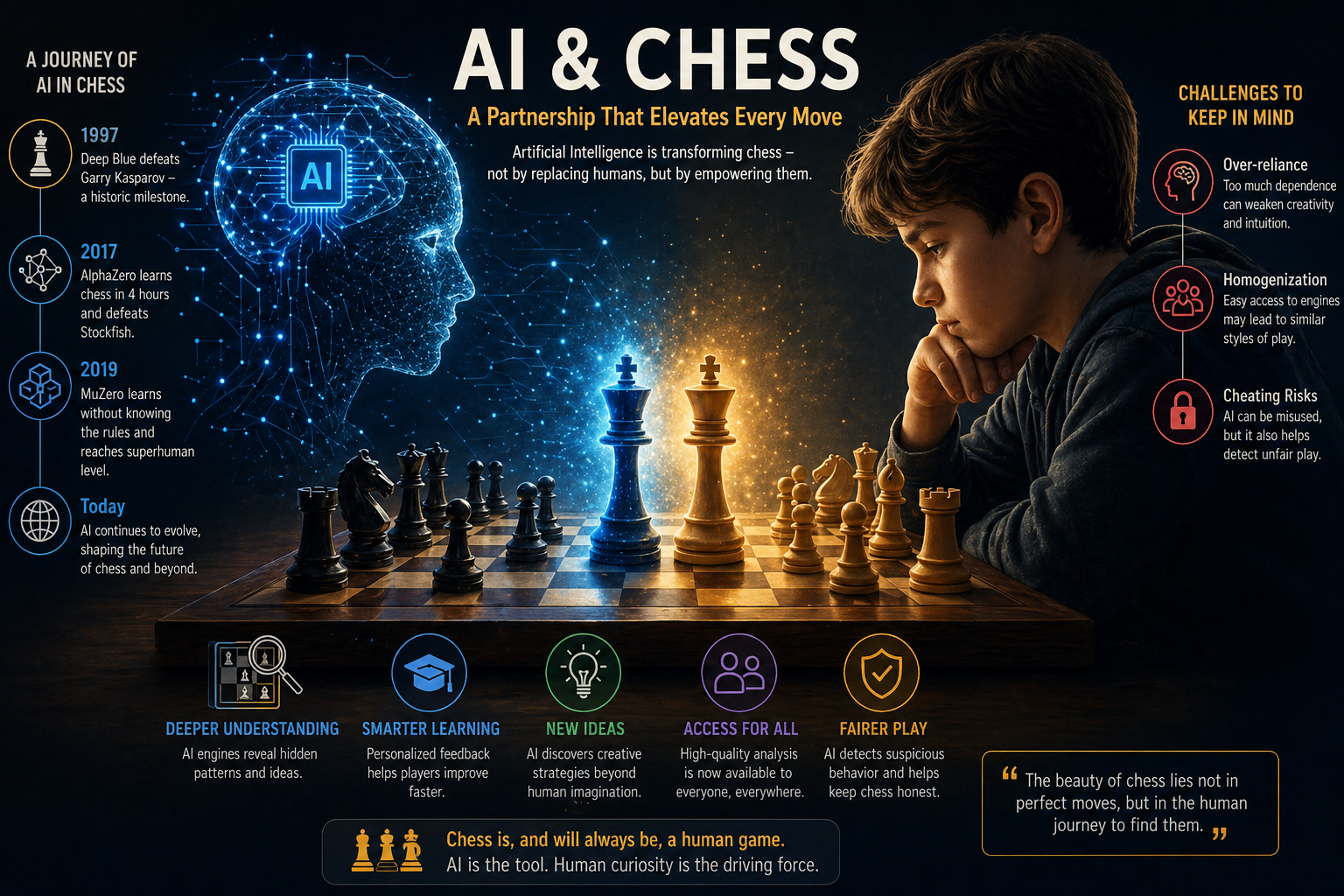
Artificial intelligence has not replaced chess; it has redefined how humans understand it. Since the historic match between Deep Blue and Garry Kasparov, machines have evolved from brute-force calculators into creative partners. Modern engines such as AlphaZero and Stockfish reveal ideas once thought impossible, reshaping strategy, opening theory, and endgame mastery.
For learners, this shift is transformative. AI offers instant feedback, personalised training, and access to world-class analysis tools once reserved for elite players. A beginner today can study positions with a depth that even grandmasters lacked a generation ago. In this sense, AI has democratized chess, making improvement accessible to anyone with an internet connection.
Yet this progress comes with tension. Over-reliance on engines can discourage independent thinking, turning learning into imitation rather than understanding. At the same time, the rise of online chess accelerated during global disruptions like the pandemic, which has made cheating a serious concern. AI now plays a dual role: it enables unfair play, but also detects it through sophisticated pattern recognition and behavioural analysis.
Ultimately, AI has not diminished the human essence of chess. Instead, it has raised an important question: is the beauty of chess found in perfect moves, or in the struggle to find them? The answer lies in balance, using AI as a guide, not a substitute. When combined thoughtfully with human creativity, AI does not weaken chess; it deepens it.